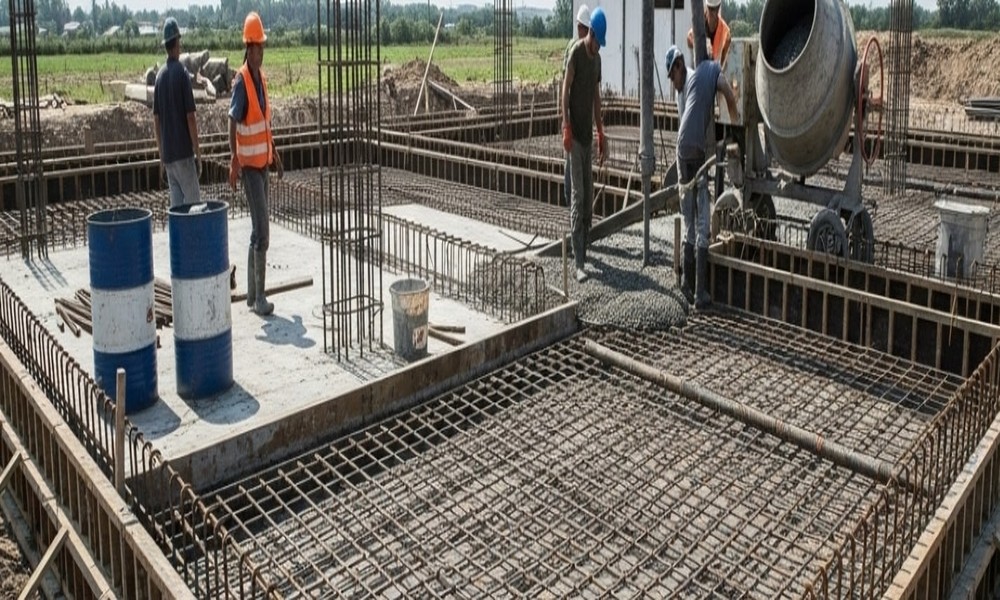

In the world of construction and civil engineering, ground conditions often determine the success or failure of a project. Weak soils, underground voids, cracks, and water seepage can all compromise structural performance. To overcome these challenges, engineers rely on one of the most effective techniques available- cement grouting.
Cement grouting is not just a repair method; it is a powerful engineering solution used to enhance soil properties, stabilize foundations, and extend the life of structures. In this blog, we explore how cement grouting works, its techniques, benefits, and applications in modern construction.
What is Cement Grouting?
Cement grouting is the process of injecting a fluid mixture of cement, water, and sometimes additives into soil, rock, or structural voids. Once injected, the grout fills gaps, hardens over time, and increases the strength and stability of the surrounding material.
This technique is widely used in both new construction projects and rehabilitation works.
Why Cement Grouting is Important
Construction projects often encounter issues such as:
- Low soil bearing capacity
- Voids beneath foundations
- Cracks in concrete structures
- Water seepage and leakage
Cement grouting addresses these problems by strengthening the ground, sealing gaps, and improving overall structural performance.
How Cement Grouting Works
The grouting process involves injecting cement-based grout into targeted areas under controlled pressure. The grout penetrates voids and pores, displacing air and water, and solidifies to form a strong, stable mass.
Key Steps in the Process
- Site investigation and soil analysis
- Drilling grout holes
- Preparing the grout mix
- Injection using pumps and pressure control
- Monitoring and quality assurance
Types of Cement Grouting Techniques
1. Permeation Grouting
Grout is injected into soil pores without disturbing its structure, improving strength and reducing permeability.
2. Compaction Grouting
A thick grout is injected to compact and densify loose soils.
3. Jet Grouting
High-pressure jets mix grout with soil, creating strong columns of treated ground.
4. Fracture Grouting
Grout is injected to create and fill fractures, strengthening the soil mass.
5. Curtain Grouting
Used to form a barrier that prevents water seepage, commonly in dams and tunnels.
Benefits of Cement Grouting
Improved Soil Strength
Enhances the load-bearing capacity of weak soils.
Structural Reinforcement
Strengthens foundations and existing structures.
Water Control
Reduces permeability and prevents leakage.
Cost Efficiency
More economical than excavation or structural replacement.
Versatility
Suitable for a wide range of construction and repair applications.
Applications of Cement Grouting
Cement grouting is used in various sectors, including:
- Foundation stabilization
- Bridge and dam construction
- Tunnel lining and waterproofing
- Repair of cracked concrete structures
- Soil improvement for buildings and infrastructure
Design Considerations
To achieve effective results, proper planning and design are essential:
- Selection of appropriate grout type and mix ratio
- Control of injection pressure and volume
- Understanding soil and site conditions
- Continuous monitoring during execution
Challenges and Best Practices
While cement grouting is highly effective, it must be executed carefully:
- Over-pressurization can damage structures
- Poor mix design can reduce effectiveness
- Inadequate site investigation can lead to failure
Best practices include using experienced professionals, advanced equipment, and real-time monitoring systems.
Conclusion
Cement grouting is a critical technique in modern construction, offering a reliable solution for ground improvement and structural stabilization. Its ability to strengthen weak soils, fill voids, and control water makes it indispensable for both new projects and repair works.
By mastering cement grouting techniques and applying them correctly, engineers can ensure safer, stronger, and more durable structures.