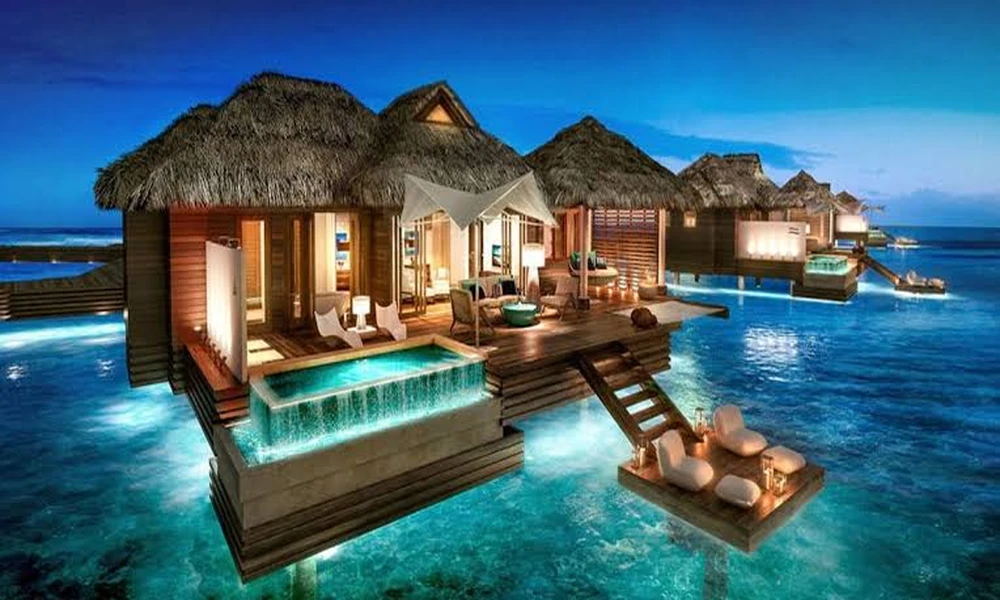

Choosing a resort is only the first decision in the Maldives. The next one is often harder: should you stay over the water or on the beach?
A Maldives water bungalow offers lagoon views and direct ocean access. A beachfront villa sits on the sand with easy access to the island. Both have clear advantages, and the right choice depends on who you’re travelling with and how you like to spend your days.
The Core Differences
| Factor | Overwater Villa | Beachfront Villa |
|---|---|---|
| Location | Above the lagoon on stilts | On the island’s shoreline |
| Ocean access | Steps from deck into the lagoon | Short walk across sand |
| Privacy | High, with open ocean views | Often shaded by trees and gardens |
| Space | Usually compact | Often larger, with gardens |
| Child suitability | Needs close supervision | Generally easier |
| Price | Usually higher | Often slightly lower |
Why Couples Often Choose Overwater
For honeymooners and couples, water villas offer the classic Maldives setting. Waking up to the sound of water, swimming straight from the deck and watching sunset from a private terrace are major draws. Many water villas also include private pools and glass floor panels. Snorkelling can start right from your steps if the villa sits near a healthy reef.
Why Families Often Choose Beachfront
Families tend to prefer beach villas for practical reasons. Children can play on the sand and swim in shallow water. Larger villas often include extra bedrooms or garden space, which gives everyone room to spread out.
Beach villas are also usually closer to kids’ clubs, restaurants and pools, which means fewer long walks along jetties with tired children.
Points Couples Should Consider
· Water villas can feel windier in the wet season.
· Some are a long walk from restaurants.
· Waves under the deck may disturb light sleepers.
Points Families Should Consider
· Decks over deep water need constant supervision.
· Some resorts set age limits for overwater villas.
· Connecting villas are more common on the beach.
Does the Season Make a Difference?
It can. The dry season, roughly December to April, brings calmer seas and clearer skies, which suits overwater stays. During the wetter months from May to October, stronger winds and passing showers can make water villas feel more exposed. Beach villas, often sheltered by trees, can feel more comfortable during this time.
Can You Combine Both?
Many travellers split their stay, with a few nights on the beach followed by a few nights over the water. Some resorts offer special rates for this. It works well for honeymooners wanting variety or families who want one special night over the lagoon.
Thinking about Budget
A Maldives water bungalow usually costs more than a beach villa at the same resort. If budget matters, a beach villa may leave more room for dining or excursions. If the overwater setting is the main reason for the trip, the extra cost may be worth it.
Making Your Decision
Ask yourself a few simple questions:
· Who is travelling with you?
· How important is direct lagoon access?
· Do you want to stay close to restaurants and activities?
Your answers usually point clearly to one option.
Frequently Asked Questions
· Which is better for a honeymoon? Most couples prefer overwater villas for privacy and views.
· Are water villas safe for children? With supervision, yes, but beach villas are usually easier.
· Can I switch villas mid-stay? Many resorts allow split stays if booked in advance.
· Which villa type is better in the wet season? Beach villas often feel more sheltered from wind and rain.
There’s no single right answer. Couples often lean toward the water, while families tend to prefer the beach. Think about your travel style and choose the setting that fits your trip best.
Overwater or Beachfront? Comparing a Maldives Water Bungalow with Island Villas for Couples and Families